

You're Doing Instagram All Wrong
Contrary to popular belief: Instagram isn't dead. Aesthetics alone aren't enough. The algorithm doesn’t actually reward perfection.

I hear it all the time: “Instagram is just aesthetics.”
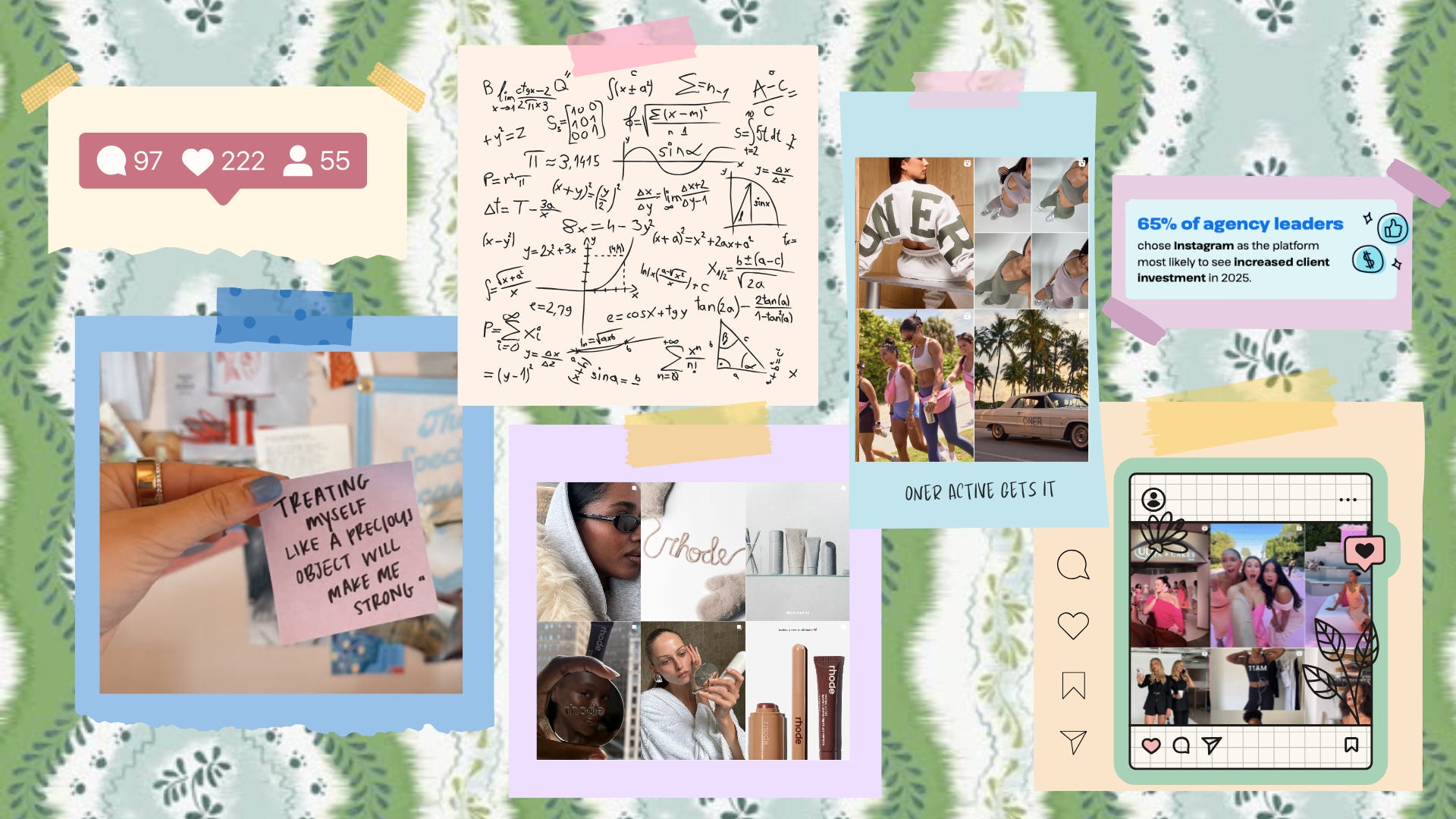
If that were true, every beautifully curated grid would be blowing up.
Yet, you rarely hear about campaigns going viral for their visual vibes alone.
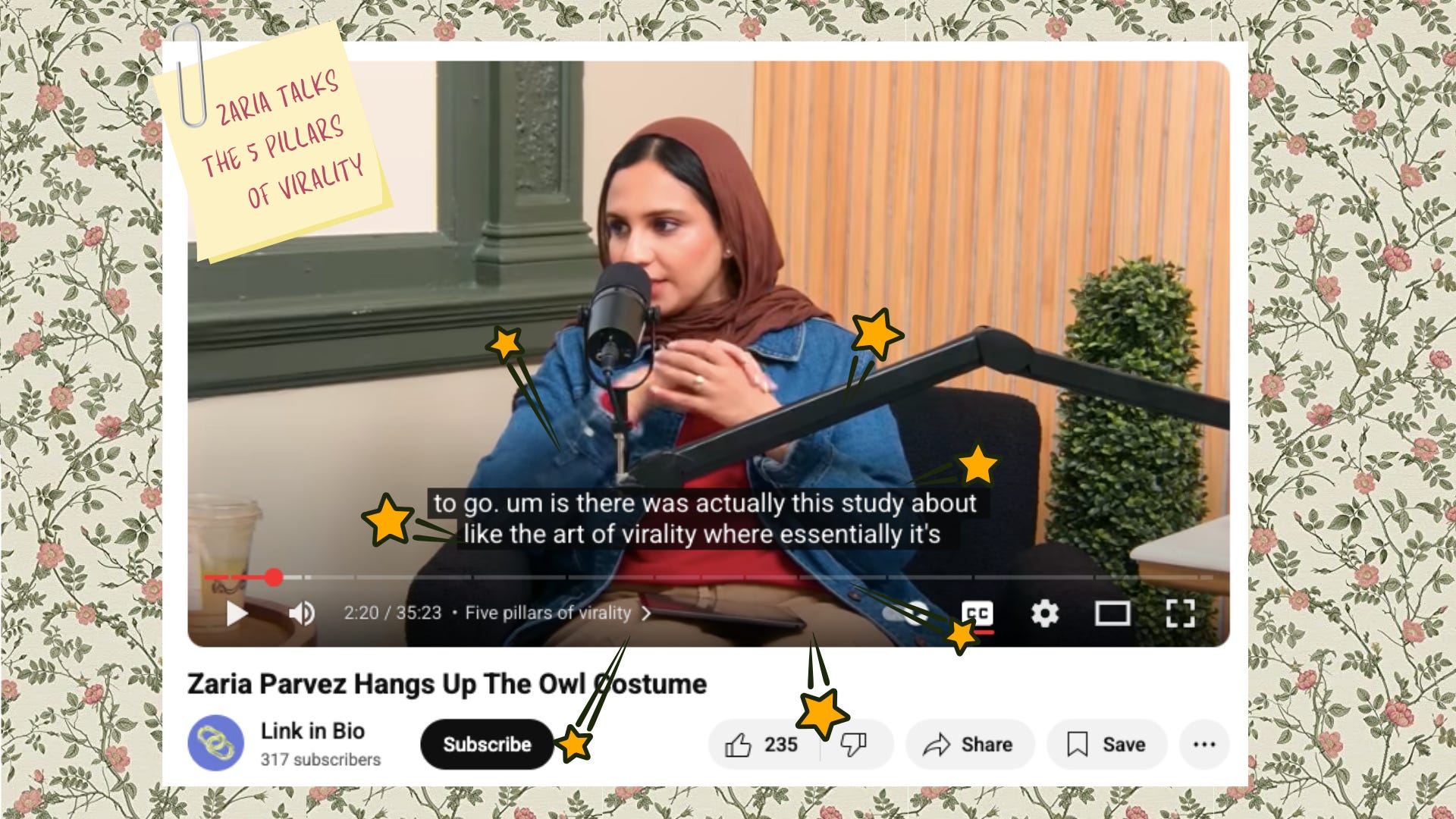
(BTW, there’s actually a science behind virality, and aesthetics isn’t a key component. That’s a deeper discussion for a different day, though. In the meantime, watch this interview with Zaria, who shares a bit about it.)
But because of this common misconception that Instagram is just about aesthetics, you often see brands, creators, and even marketers (*cries*) focusing on grids, stylized photos, and overly produced videos… that end up curating no engagement. I’m talking minimal comments, shares, and reposts. It pains me.
Then you have another camp of people shouting, “Well, that’s because Instagram is dead!” That’s also incorrect.
I’ve worked with dozens of brands and creators who thrive on Instagram organically. One DTC ecommerce brand I recently partnered with had organic Instagram rise into their top three sales drivers through a strategy I implemented, even outperforming paid ads on certain weeks (Not to brag!)
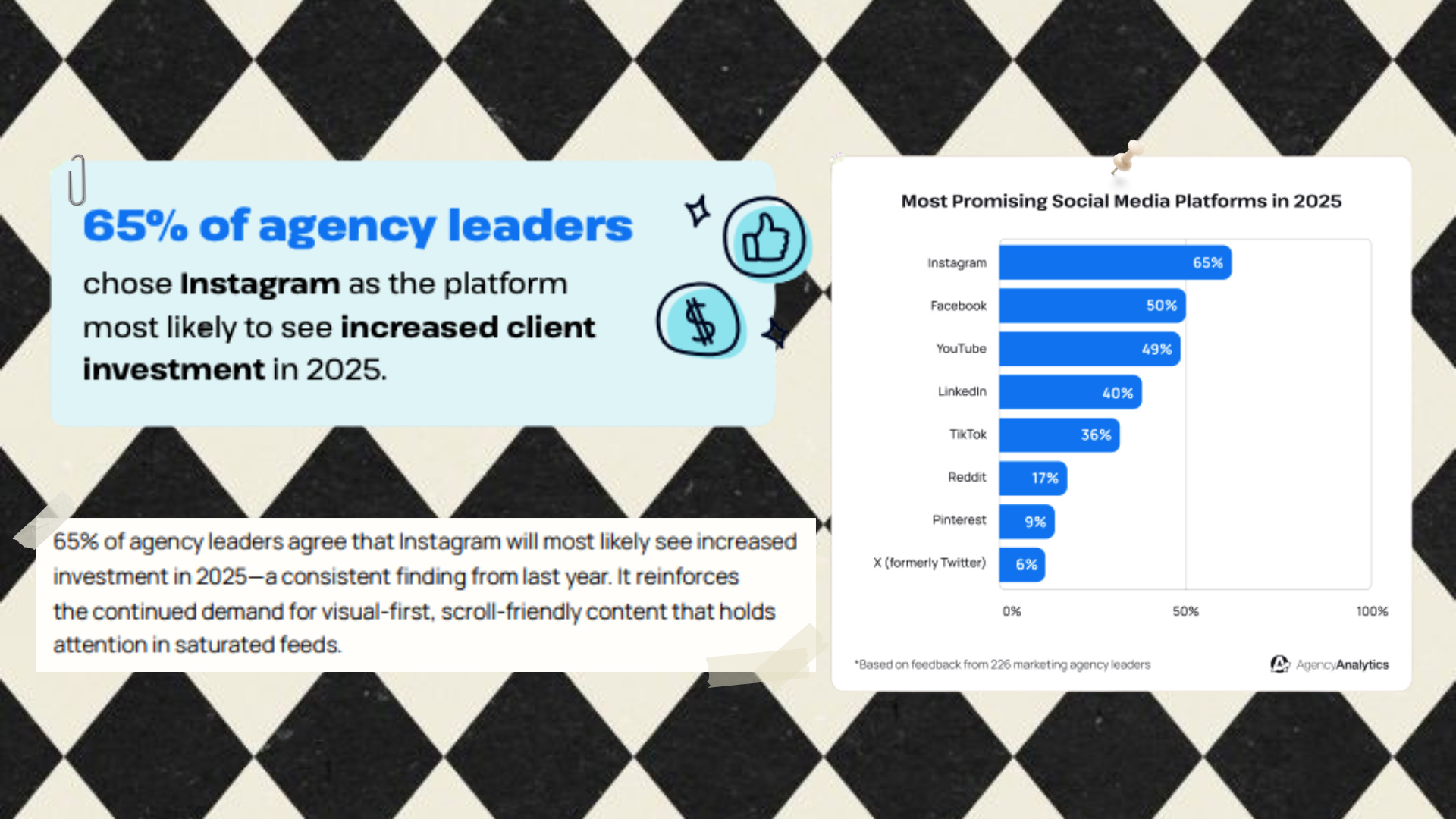
But don’t just take my word for it. According to AgencyAnalytics’ 2025 Marketing Agency Benchmark Report, 65% of agency leaders chose Instagram as the platform most likely to see increased client investment this year. Significantly beating out top platforms like TikTok, YouTube, and Facebook. Surprise, surprise.
So what’s the deal? Why do some brands see huge engagement while others get crickets, despite all their elevated visuals?
It comes down to understanding what actually makes Instagram work beyond the grid, beyond aesthetics, beyond “just post more.”
There are specific levers you can pull, experiments you can run, and content approaches that build connection, loyalty, and yes, sales.
Let’s break down what’s actually working right now.
It’s Simple: Aesthetics Alone Aren’t Enough
The truth is, aesthetics might stop the scroll for a second, but at the end of the day, this type of content alone doesn’t build trust, community, or sales. Without story. Without emotion. Without substance. Without something real to connect with, it won’t click for most people, and they won’t be compelled to come back.
Aesthetics Matter. But There’s More. It’s a Math Equation.
When you layer aesthetics with meaning, you get engagement. Aesthetics + story + emotion + consistency is actually what can equal real organic success on Instagram.
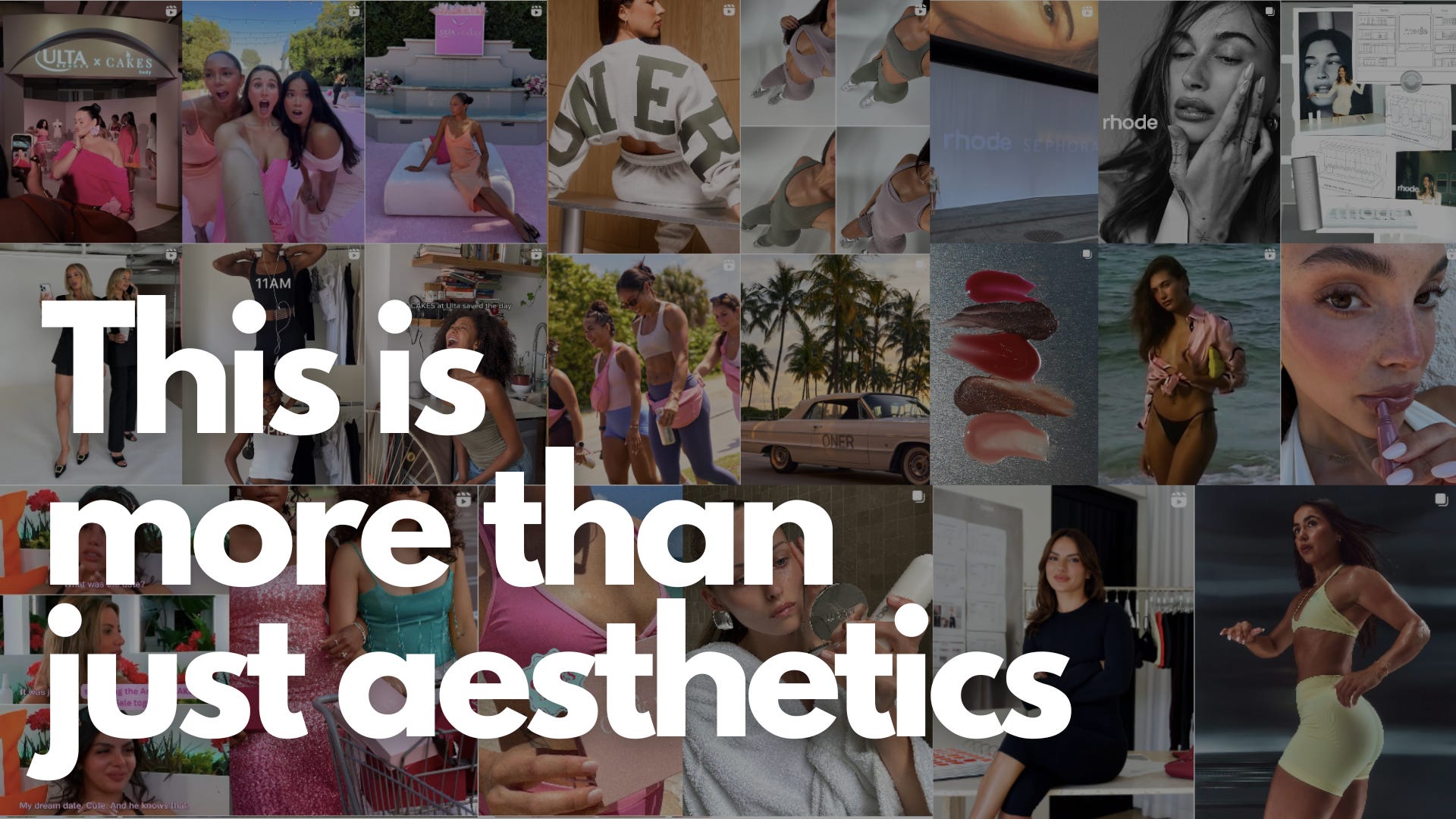
Rhode: You might be thinking, “Wait, aren’t they aesthetics driven?” While Rhode could technically survive on aesthetics alone, they actually don’t. The brand also leans heavily into showcasing sensory details that relate to their products (textures, environments, scents, colors, mood boards), they invest heavily in creator content and UGC so the customer sees themselves in the story, and founder-led storytelling is also a key component (Hailey Bieber sharing her beauty routines and bts moments). Plus, they love to preview innovative drops on Instagram to spark conversation. They don’t actually just rely on beauty; Rhode has curated an engaging online lifestyle you can tap into through Instagram.
Cakes: This brand leads with humor, inclusivity, and body confidence. Their content often feels like an inside joke you’re invited to be part of (playful, self-aware, and deeply relatable). Instead of relying on polished product shots, they spotlight real people with all different body types, normalizing what it looks like to actually live in their products. Founder-led storytelling is a recurring thread (again!), grounding the brand in authenticity and making it feel personal. They’re also quick to play with trends, weaving their product seamlessly into cultural moments without forcing it. Layer on their heavy use of UGC (customers proudly share their experiences and become part of the brand’s narrative), and you get a social presence that’s as entertaining as it is empowering.
Oner Active: At first glance, you might be quick to say their focus is on stylized ecommerce photography. But that is simply not the case. Beyond sleek visuals, Oner uses Instagram to educate its audience and build community. Posts explain fabric, fit, and performance in a way that helps customers feel confident before buying. Layer on their strategic athlete collabs, founder-led storytelling (yet again!), and user-generated content featuring everyday people in their gear — the result is a brand that’s both aspirational and practical, with social content that sells because it informs and inspires.
Not all equations are the same; you have to find the right balance for your brand.
This goes for creators, too. Being aspirational and aesthetic alone won’t grow your following or engagement. The moment you add a layer of reliability, the sooner you’ll see traction.
Take Caroline Lunne, for example, one of my favorite comfort creators of the moment.
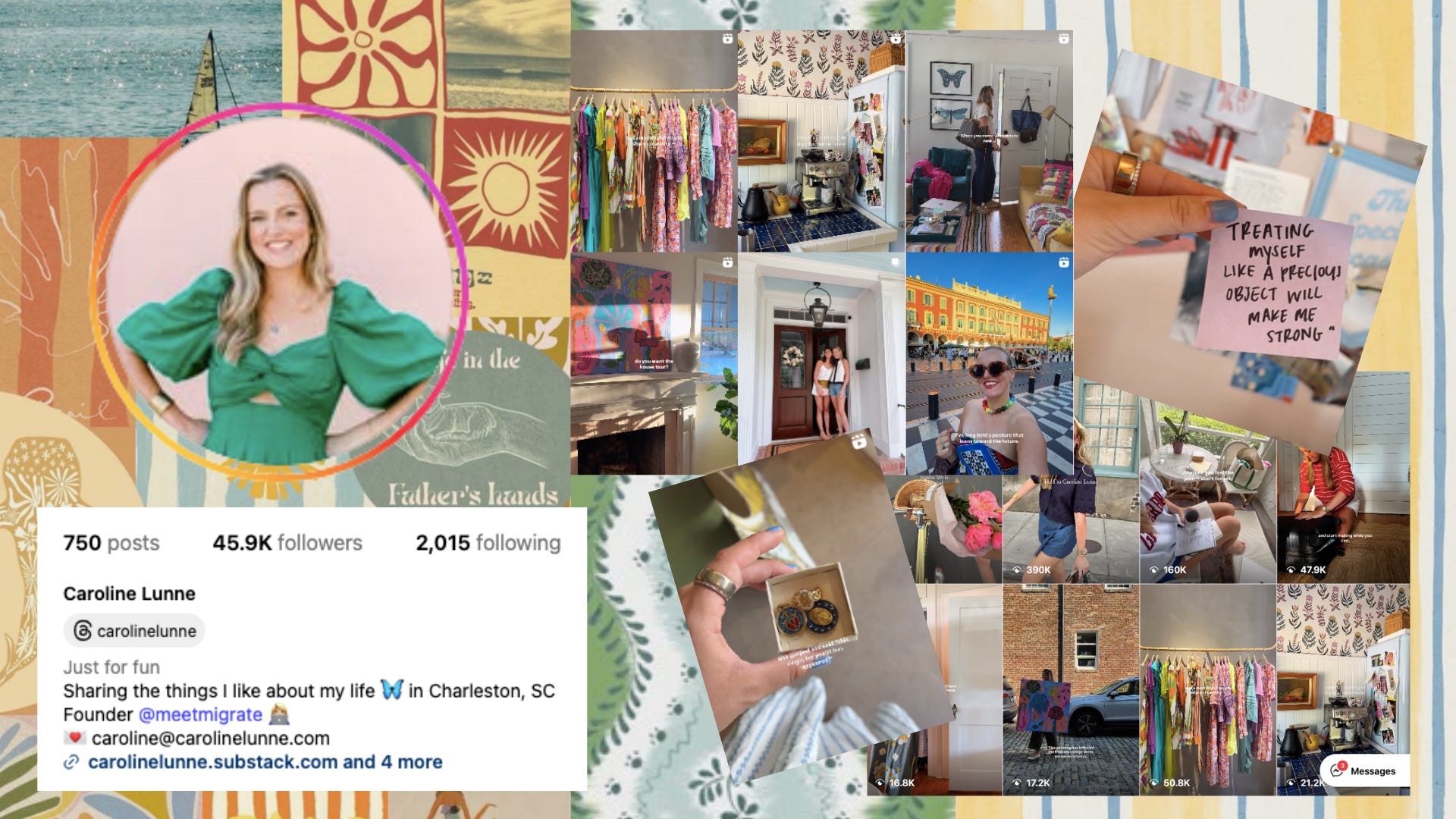
I found her when she only had a few thousand followers and was sharing photos and videos of her beautiful life. Once she got confident and creative in her storytelling and vulnerability, though, she gained 30k followers in two months (I’m oversimplifying this for brevity; you can read her story here).
When Aspiration Backfires
Meanwhile, I also follow aspiring creators who have been posting picture-perfect content for years but still haven’t gained traction. Why? Because they’re missing the human layer. No vulnerability. No storytelling. No peek behind the curtain. Just glossy, elevated visuals on repeat. And while that might look impressive, it often leaves the audience feeling more distant than drawn in.
Aspiration is tricky. On one hand, it can inspire; on the other, it can alienate. If everything you post feels too curated, too perfect, or too out of reach, people stop seeing themselves in your content. It becomes a pedestal, not a conversation. And let’s be real, most audiences aren’t looking for a brand or creator that only reminds them of what they don’t have. Most people want to feel seen, understood, and invited in.
That’s why the most effective social content today balances aspiration and accessibility. The “elevated but human” mix. The story that shows not just the polished outcome, but also the messy process, the why behind the brand, the personality behind the post. Without that, aspiration alone isn’t just ineffective; it can actually push people away.
What Works: The Real Instagram Playbook
If you want Instagram to actually work, you need more than a polished feed. The brands breaking through right now are experimenting with content that has depth and dimension, stuff that makes people stop, feel, and respond. Aesthetic isn’t useless, but it only works when it’s paired with strategy and story.
Here are the levers to pull, the experiments worth trying:
Emotion + Voice over Perfection
Raw clips, wrinkles, story-moments. Let people feel you’re human.Content Archetypes
Behind-the-scenes, user stories, product education, founder’s moments, aesthetic product shots. Pick 3-5 types and rotate them.Hooks & Context
The first seconds / first lines matter. Aesthetic doesn’t pull people in if there’s no reason to stick around.Community & UGC
Encourage your audience to share. Repost them. Let fans be your content co-creators.Measure what matters
Comments, DMs, saves, shares, and reposts are more important than just views. What’s people’s sentiment? What are they responding to emotionally?
Instagram doesn’t reward perfection. It rewards connection.
Despite what you’ve been told about Instagram, there are still brands and creators that thrive on Instagram and have actually cracked the code. They’ve discovered the real Instagram playbook, one built on substance over aesthetics.
It’s not about abandoning aesthetics; it’s about making aesthetics work for your audience. The brands winning are priotizing storytelling, strategy, and community into their feed so the visuals pull people in, but the substance keeps them hooked.
Go give it a shot and report back.